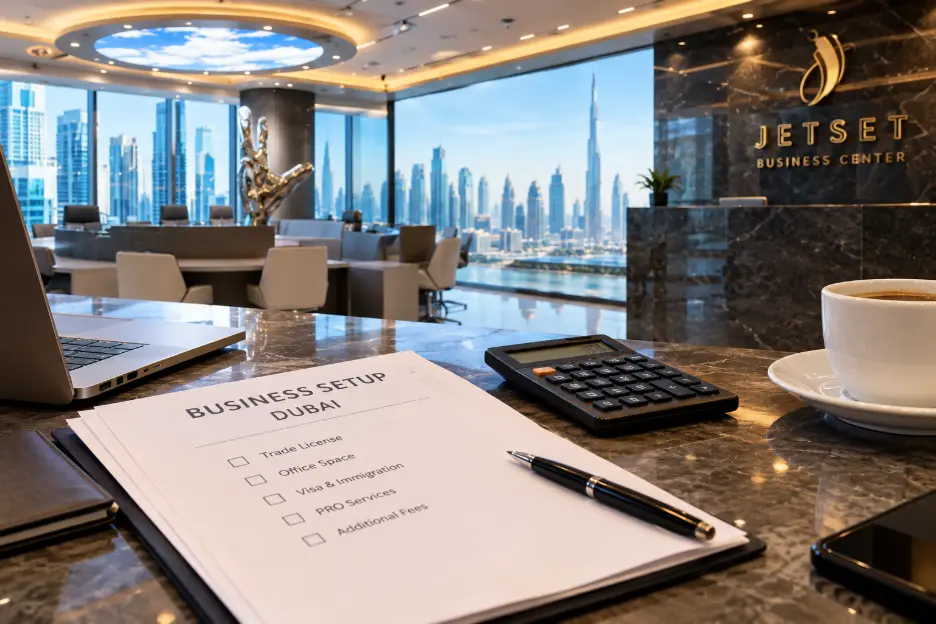

Quick Answer: To set up a business in Dubai, choose your business activity, pick a structure (mainland or free zone), register a business address, get your trade licence from the Department of Economy and Tourism (DET, formerly DED) or a free zone authority, then add sector approvals, visas and a corporate bank account. A straightforward setup takes a few weeks when your documents are ready. Our company formation team can run each step for you.
Dubai draws founders for clear reasons: no personal income tax, full foreign ownership for most activities, and a central position between Europe, Asia and Africa. The process is predictable if you take the steps in the right order. This guide sets out that order, the approvals people forget, and the mistakes that cost the most time.
Step 1: Choose Your Business Activity
The first step in setting up a business in Dubai is defining your business activity. The Department of Economy and Tourism lists over 2,000 approved business activities ranging from trading and manufacturing to services and consulting. Your chosen activity will determine the type of license you need and whether a mainland or free zone setup is more appropriate.
Step 2: Select Your Business Structure
Dubai offers several business structures:
- Sole Establishment – Owned entirely by a single individual
- Limited Liability Company (LLC) – Most common structure for mainland businesses
- Free Zone Company – 100% foreign ownership allowed within designated zones
- Branch Office – Extension of a foreign parent company
For most SMEs and startups, an LLC or free zone company is the preferred choice, depending on whether you need to trade directly with the UAE market.
Since the 2021 changes to UAE company law, most mainland activities allow 100% foreign ownership, so most businesses no longer need a UAE national partner. A short list of strategic activities still does, so check your activity first. Our guide to mainland vs free zone compares the two structures in detail.
Step 3: Choose Your Location
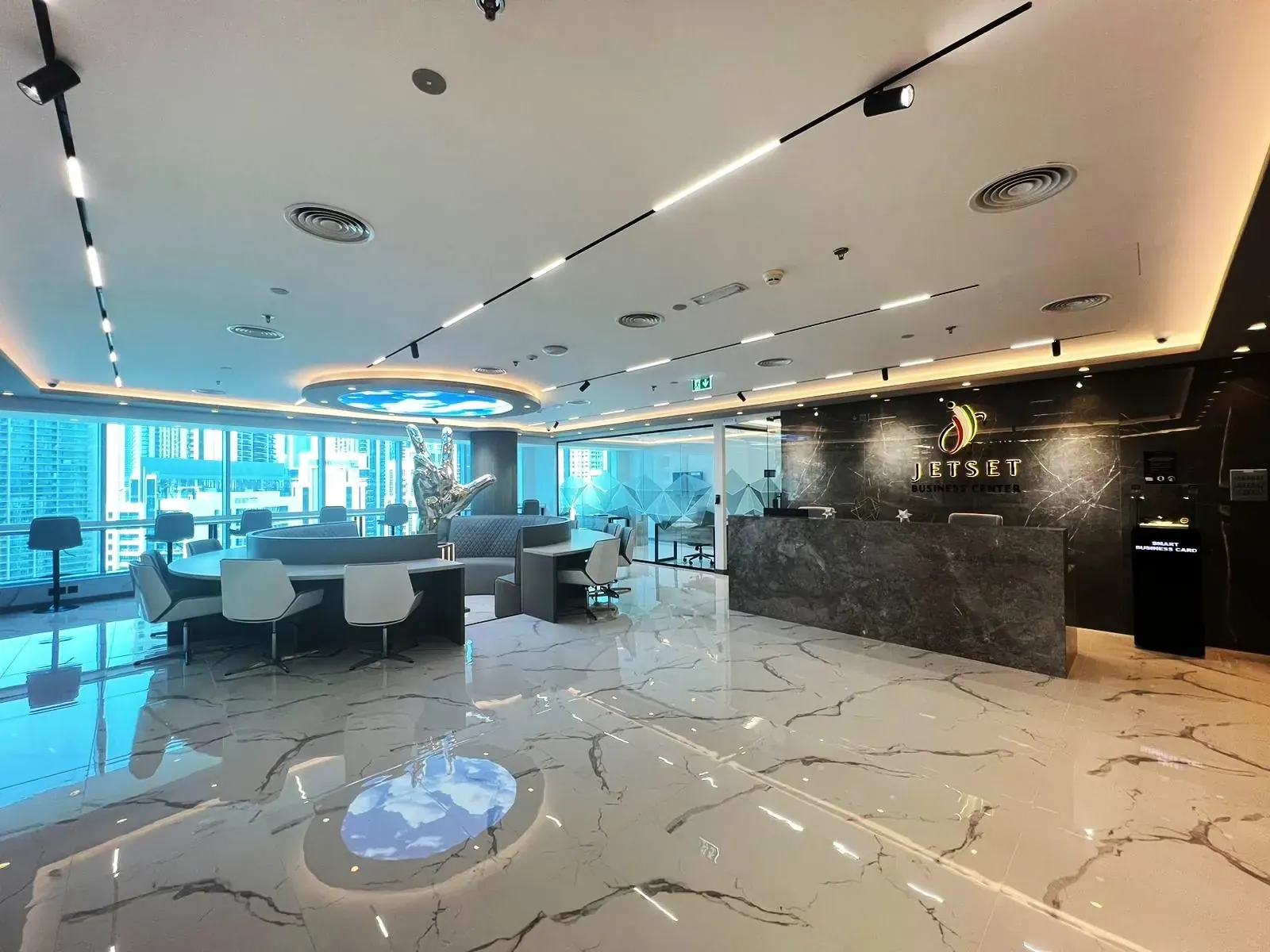
Your business address is more than a postal requirement. It goes on your licence, your bank file and your website, so clients and banks will check it. Jetset Business Center is on floor 20 of Prime Tower, Business Bay, ten minutes’ walk from Burj Khalifa and Dubai Mall.
If you are not ready for a full office, a virtual office with Ejari gives you a registered Business Bay address for trade licence issuance without a full tenancy. Our Ejari works for mainland (DET) and free zone companies.
Step 4: Obtain Your Trade License
The trade license is the foundational document for any Dubai business. Depending on your structure and activity, this will be issued by:
- The Department of Economy and Tourism (mainland)
- The relevant Free Zone Authority (free zone entities)
You will typically need to submit passport copies, a business plan, NOC letters (if applicable), and a signed lease or Ejari certificate.
Step 5: Get Sector Approvals and Visas
Some activities need a second approval on top of the licence. Healthcare needs the health regulator, food businesses need food safety approval, and real estate brokers need RERA training and registration. Check this before you apply, because it changes both the timeline and the cost.
Visas come next. The company sponsors your own residence visa and those of your staff. Expect an entry permit or change of status, a medical test, Emirates ID biometrics and the residence visa itself. Our guide to the UAE residence visa through your business explains each type.
Step 6: Open a Corporate Bank Account
Once your license is issued, you can open a corporate bank account. Dubai has a robust banking sector with both local and international institutions. Most banks require your trade license, Memorandum of Association, Emirates ID, and proof of address – and will conduct an inspection at your registered Ejari address. Our guide to opening a corporate bank account in Dubai lists what banks check.
Step 7: Set Up Your Workspace
Whether you need a private office for your team, a coworking desk, or just a meeting room for client visits, your workspace should match your current needs and leave room to grow.
At Jetset Business Center, private offices start from AED 50,000 a year (about AED 5,000 a month), a hot desk is AED 1,800 a month, and meeting rooms start at AED 200 an hour, all at Prime Tower.
Should You Use a Business Setup Consultant in Dubai?
You can do it alone, but most first-time founders save time with help. A consultant checks that your activity matches your plans, prepares documents in the format each authority wants, and tracks approvals across several portals. The value continues after launch: licence renewals, new visas and changes to the licence. Read how business setup consultants help for what to expect.
Common Mistakes When Setting Up a Business in Dubai
- Choosing an activity that does not match what the business will actually do.
- Submitting incomplete documents, which means resubmission and delay.
- Getting the licence right but treating the business address as an afterthought. Banks and clients both check it.
- Budgeting for the licence only and forgetting visas, office, approvals and renewals. See the hidden costs of business setup in Dubai.
Our list of mistakes to avoid in a mainland setup goes into more detail.
Ready to Start?
Our Company Formation & PRO Services team handles every step, from the licence application to government liaison. Book a free consultation and bring your business activity and the number of visas you need.
Frequently Asked Questions
How long does it take to set up a business in Dubai?
A straightforward licence can be issued within days once documents are complete. Sector approvals, visas and the bank account add time, so plan for a few weeks from start to first trading day.
Can I own 100% of my Dubai business?
Yes, for most activities. Free zones allow full foreign ownership, and since 2021 most mainland activities do too. A small number of strategic activities still need a UAE partner.
Do I need a physical office to set up a business in Dubai?
A mainland licence needs a registered address with Ejari, which a virtual office can provide for many activities. Some regulated activities need inspected premises. Free zones set their own rules.
What documents do I need to start a business in Dubai?
Usually passport copies of all shareholders, a short business plan, the memorandum of association, your tenancy or Ejari, and any NOC or sector approval your activity needs. Corporate shareholders from abroad also need attested company documents.
Can I run a business from home in Dubai?
Some activities qualify for a home-based licence, but not all. Many founders use a business center instead, so they have a registered commercial address, meeting rooms and a reception that can host bank inspections.